October 17 and 18, 2024.
The photos are best viewed on a computer screen.
The first two houses are part of a grouping of houses in a place called Polymath Park near Acme, PA and south east of Pittsburg. Currently there are a total 4 houses, two by FLW, that were slated for destruction but were deconstructed and rebuilt here on a 130 acre wooded land. Two houses were designed by his apprentice Peter Berndtson, mastermind behind the Polymath Park. He built the Walter house in 1964 and the Blum house in 1965. I did not see either one of these houses because you need to be on a different tour to see them. The park is now maintained by Tom Papinchak. All four houses are available for overnight guests. The first photos are the main visitor center and a view through the trees of dining opportunities in the Treehouse pods.


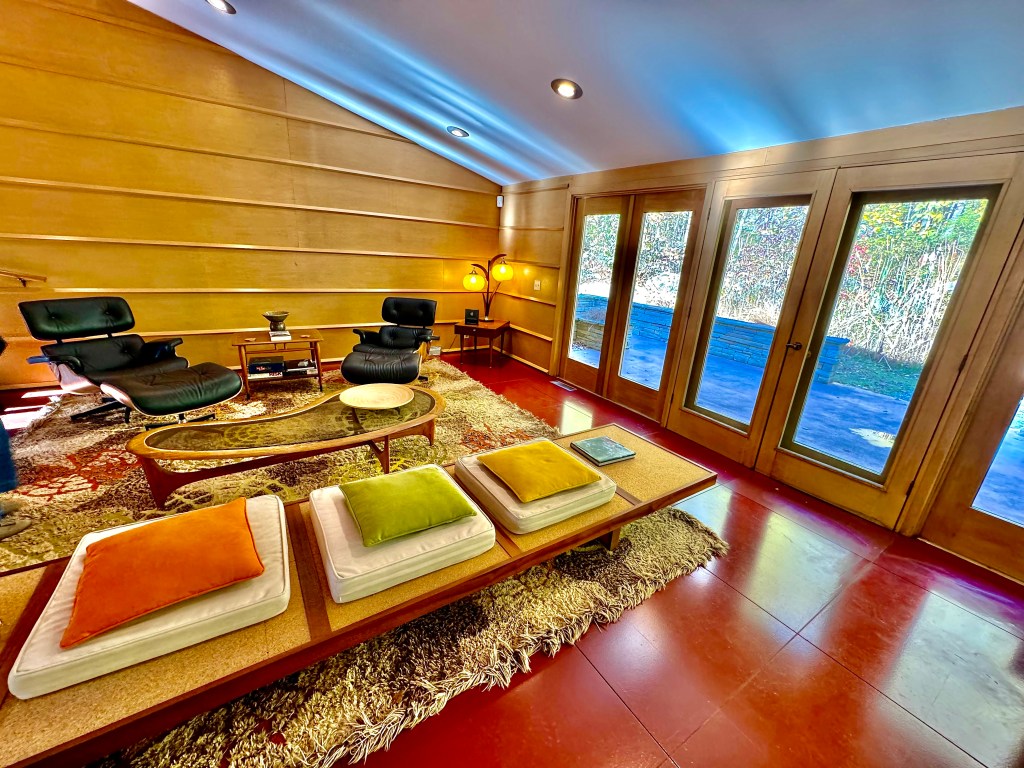
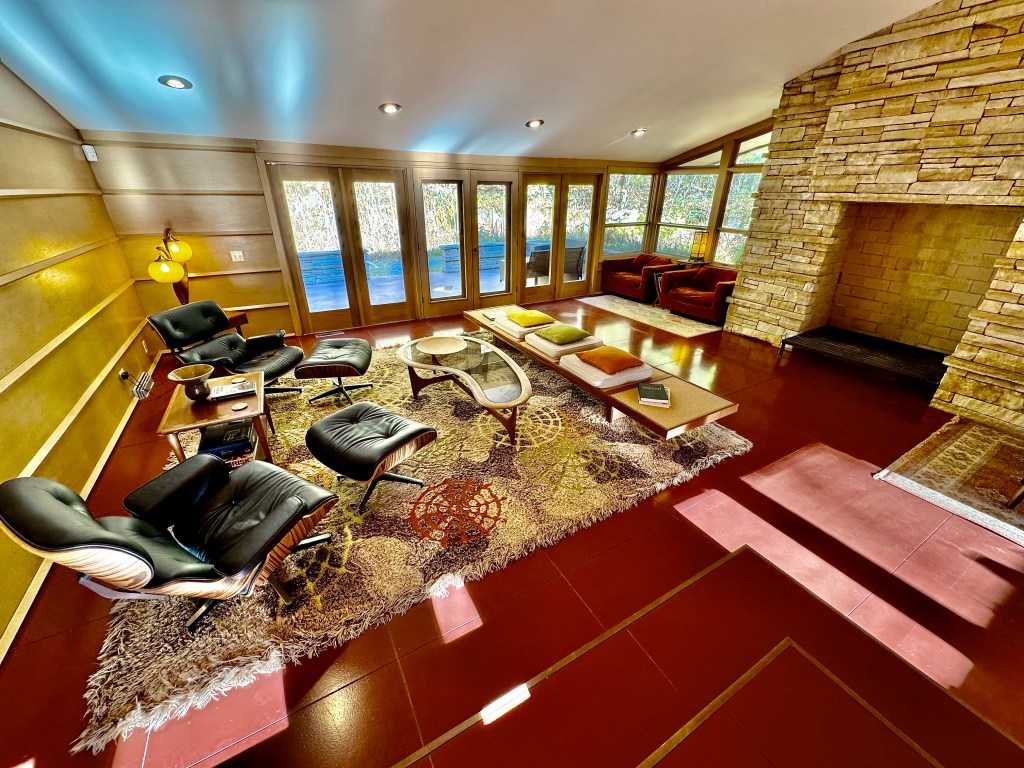
The first house I visited is the Duncan House, added to the park in 2007. It was built in 1957 in Lisle, IL for Donald and Elizabeth Duncan. It was one of 11 prefabricated Usonian designs by a Wisconsin builder, Marshall Erdman. After the death of Donald Duncan the house became derelict. The house was deconstructed in 2004 and reassembled in Polymath Park. The foundation and any stonework is done locally in faithful copies of the original. If you know anything about FLW houses they are all characterized by the flat horizontal lines.


The interior built in furniture is all authentic and some of the free standing furniture is also. Other pieces are from the time periods when the houses were first built.



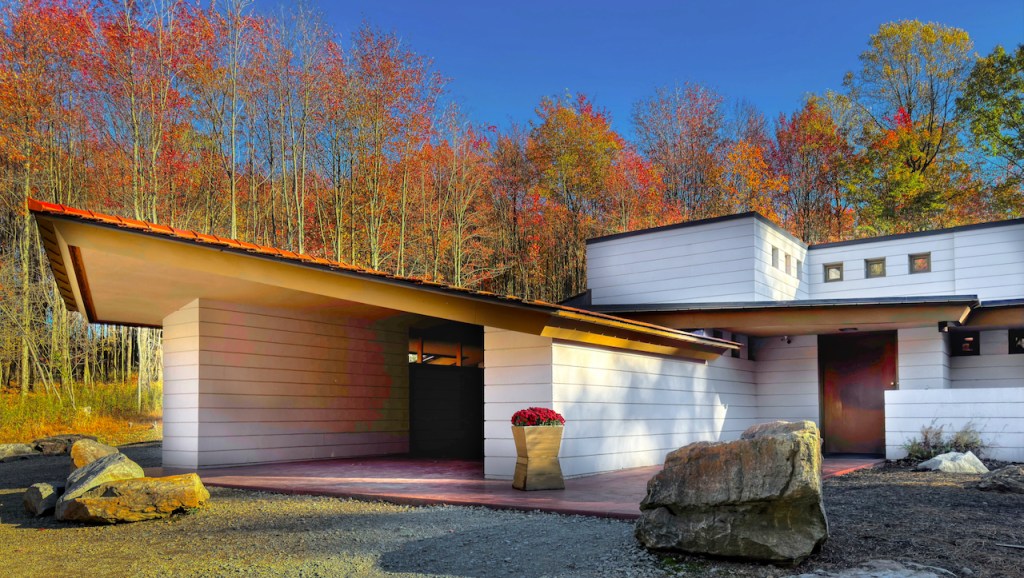
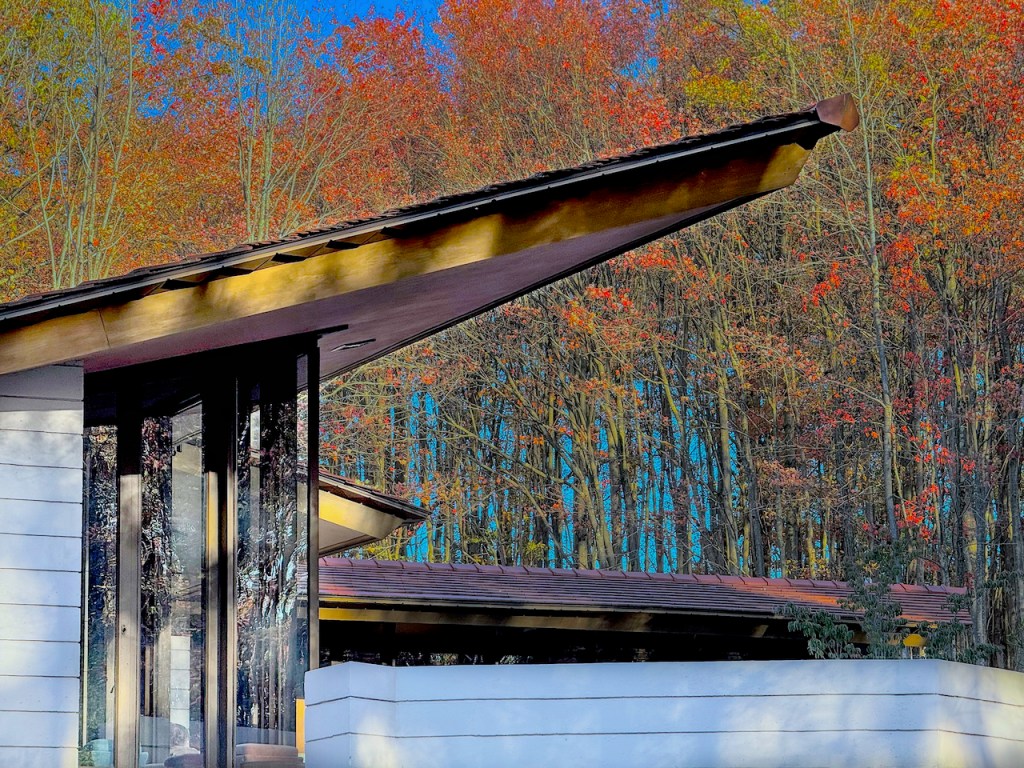
The next house is called Mantyla, meaning “of the pines”, was designed as a middle class Usonian home for R.W. Lindholm family by FLW and built in 1952. It was originally located in the small town of Cloquet in Minnesota. The low-slung design of 2,300 square feet was constructed with concrete block with the roof clad in reddish Ludowici tiles. This is an undisputed master piece that was laboriously moved to Polymath Park. The original secluded house was compromised by encroaching retail stores and became unmarketable.
It is open for overnight guests at $825 per night, so no I did not stay here.


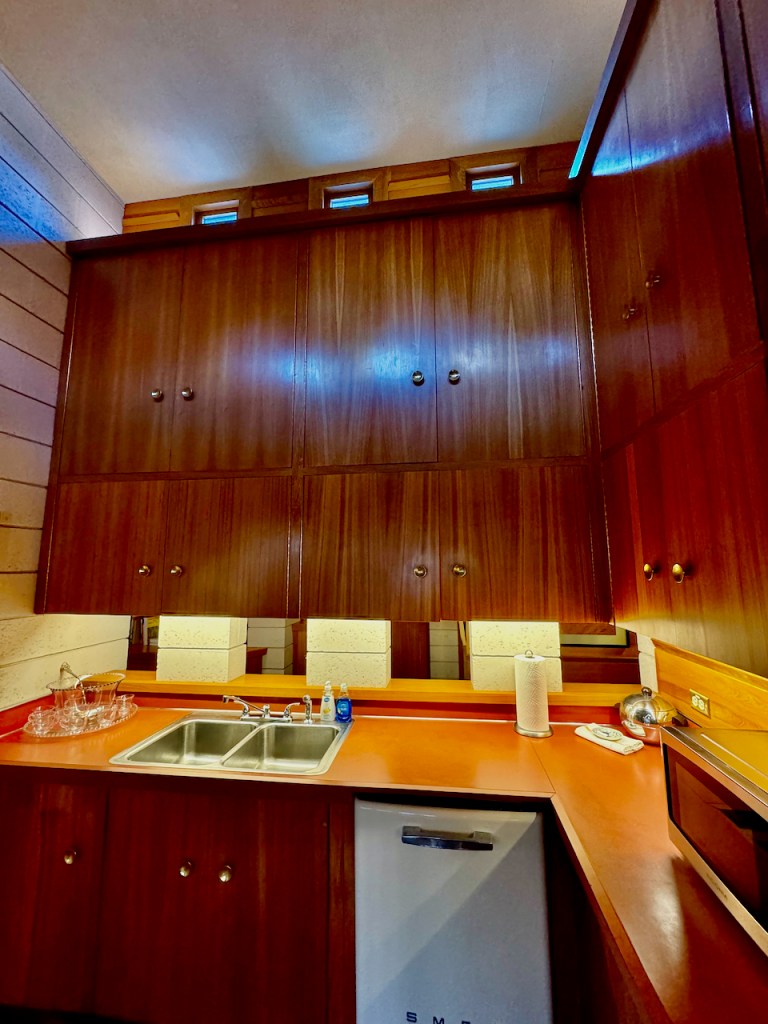
This house was influenced more than usual by what the owners wanted and FLW was able to accommodate them. For example, they wanted a larger kitchen and a dining room which was always low on the priorities FLW. The first photo shows the dining table, the second and third the kitchen with very high cabinets and both high and low windows. The fourth photo shows the windows on the back side of the kitchen.



Notice in the above photo that although the walls are made with concrete block that the vertical lines between the blocks are filled in completely so that the main eye perspective is the horizontal lines. Notice in the middle photo below that the concert floors are all infused with FLW’s signature red color.


The next day I traveled a relatively short distance to the most recognizable and Frank Lloyd Wright’s most impressive and famous house, Fallingwater, near Mill Run, PA, 70 miles southeast of Pittsburg. The house was designed and built in 1935 over a waterfall on Bear Run Creek. This house was to serve as a weekend retreat for Liliane and Edgar J. Kaufmann, the owner of Pittsburg’s Kaufmann’s Department Store. It is a National Historic Landmark, a World Heritage Site, and the American Institute of Architects named Fallingwater the best all time American Architecture.
At age 67, Frank Lloyd Wright was given the opportunity to design and construct three buildings with Fallingwater being one of them that brought him back into prominence. If you are interested you can read an extensive and fascinating account in Wikipedia. The original cost estimate was $35,000 and the final cost was $155,000 which is equivalent to 3.4 million in 2023 dollars.
First a little early morning fog at the RV Park.


Tours of about a a dozen people leave the visitor center every 15 minutes. In the first looks, you can see the extensive cantilevered decks and the water stream under the house.


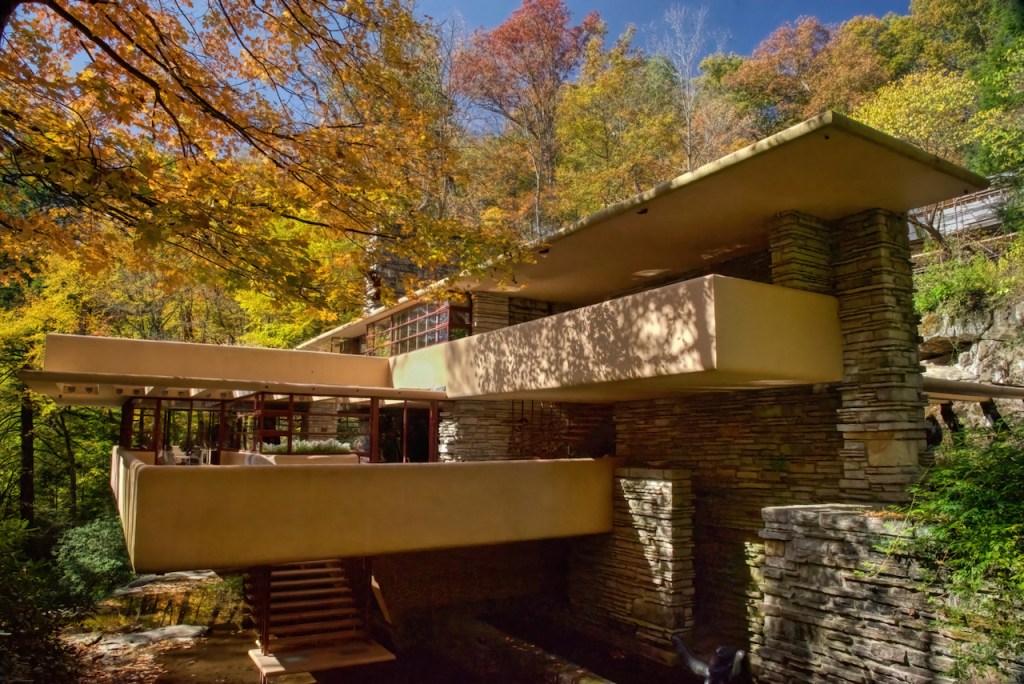
We were only allowed to photograph on the first floor. On the second floor are his and her bedrooms with decks and on the third floor is the bedroom for their son. The second photo is the covered stairway down to the waterfall. Note the extensive built in furniture and other furniture which are all designed by FLW.


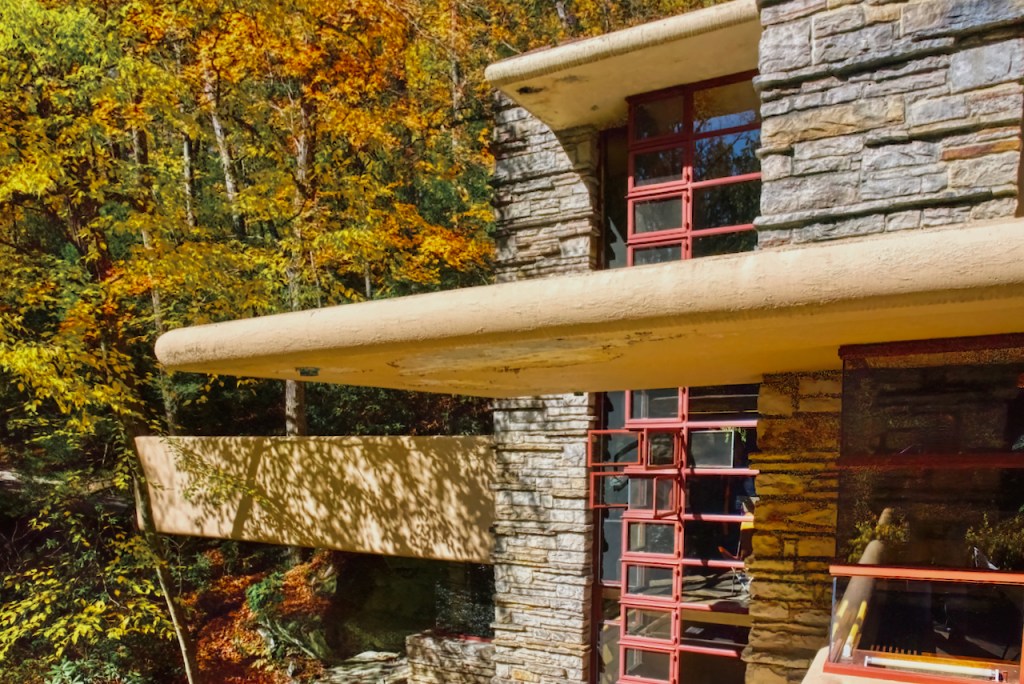
Next are a two photos of the unique corner glass with no frame at the corners. The glass is also cut to fit against the rough stone walls.


Another unique feature is a towering set of windows which open to reveal, that again, there is no corner post. Look at two of the opened windows to see the effect.
The first photo is from the third floor deck. The second is a covered walkway which appears to have very minimal support, one support is visible on one side and others like are at each step for the whole structure. It is made from reenforced concrete with rebar and they did not know if it would hold up when they removed the construction supports.
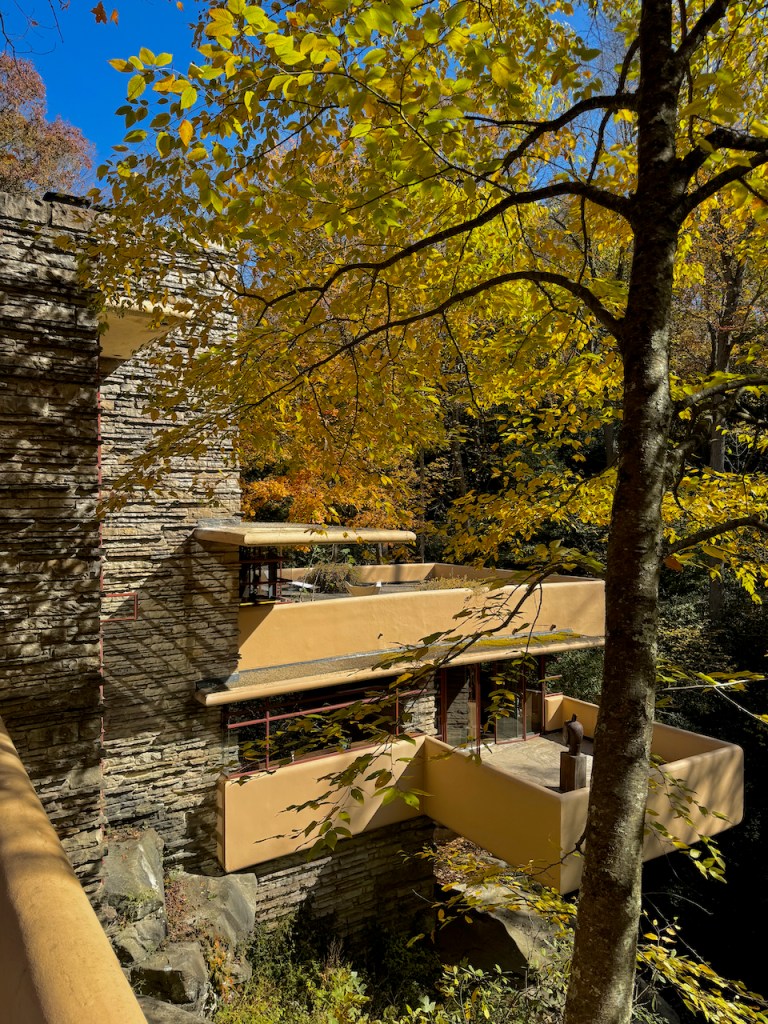
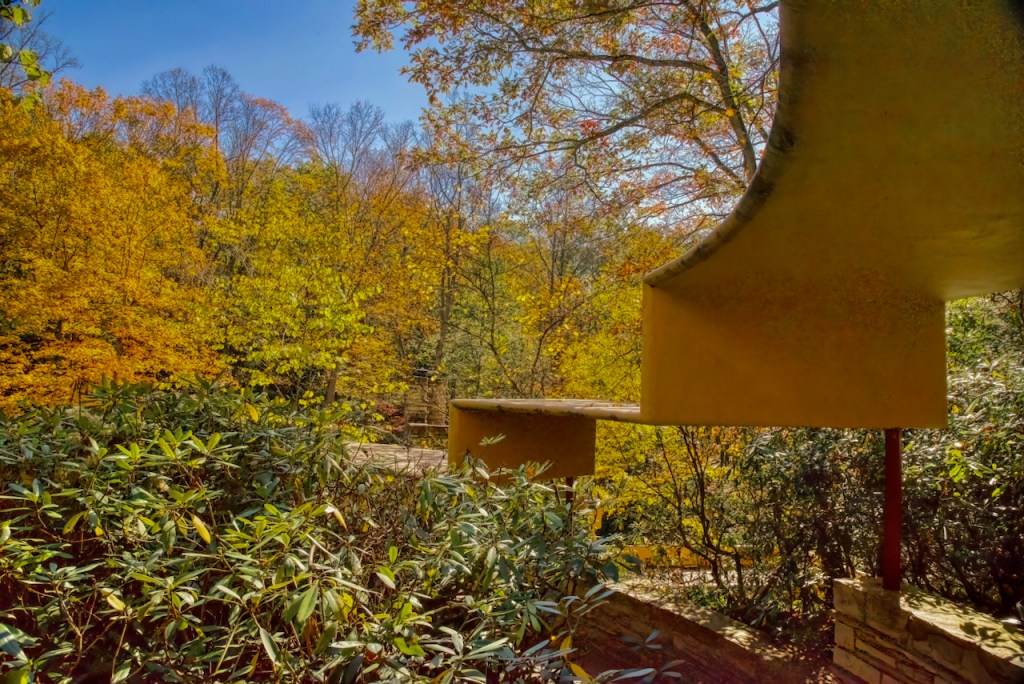
The next views are from one view point away from the house and are scenes that you may have seen. I was purposely here and hoped for the fall foliage which did not disappoint.


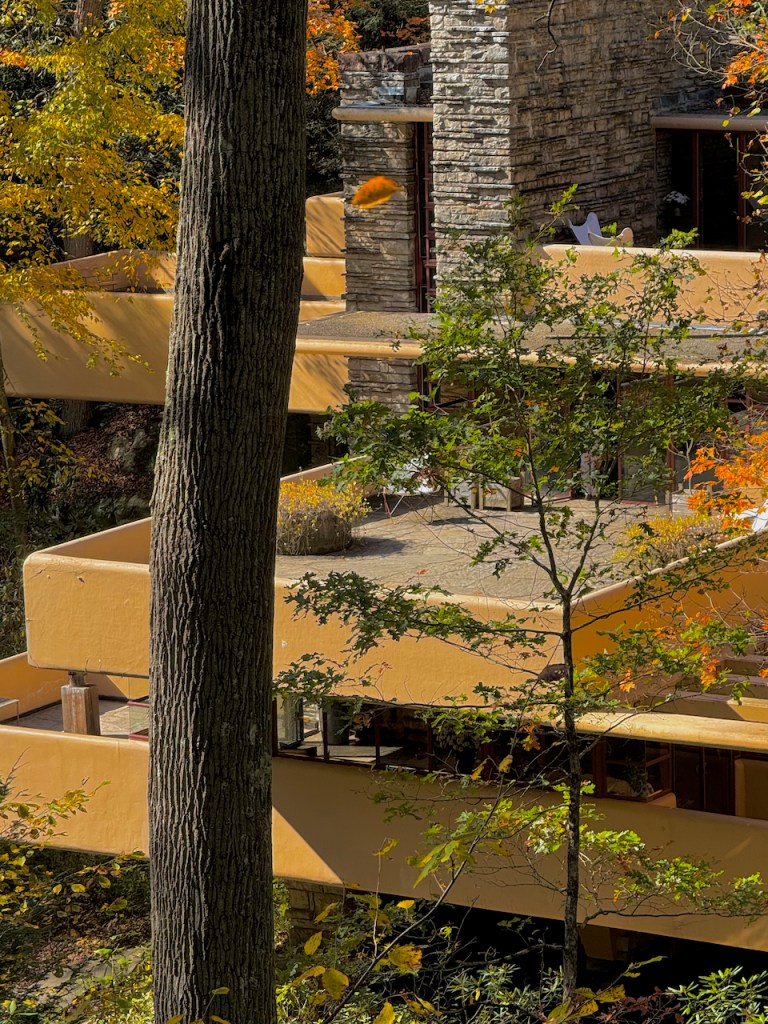
The last Frank Lloyd Wright house that I visited is called Kentuck Knob (2,300 square feet on top of a 2,050 foot mountain) or the Hagan House, and is only a few miles from Fallingwater. The crescent shaped Usonian house (1953-6) is tucked into the side of a hill to catch the best light. This house was built when FLW was 86 years old, and while working on the Guggenheim Museum, the Beth Sholom Synagogue and 12 other residential homes. He only visited it once while under construction and was the last house that he built. Again the details are fascinating and can be found in Wikipedia. We were not allowed to take photos on the inside of the house.


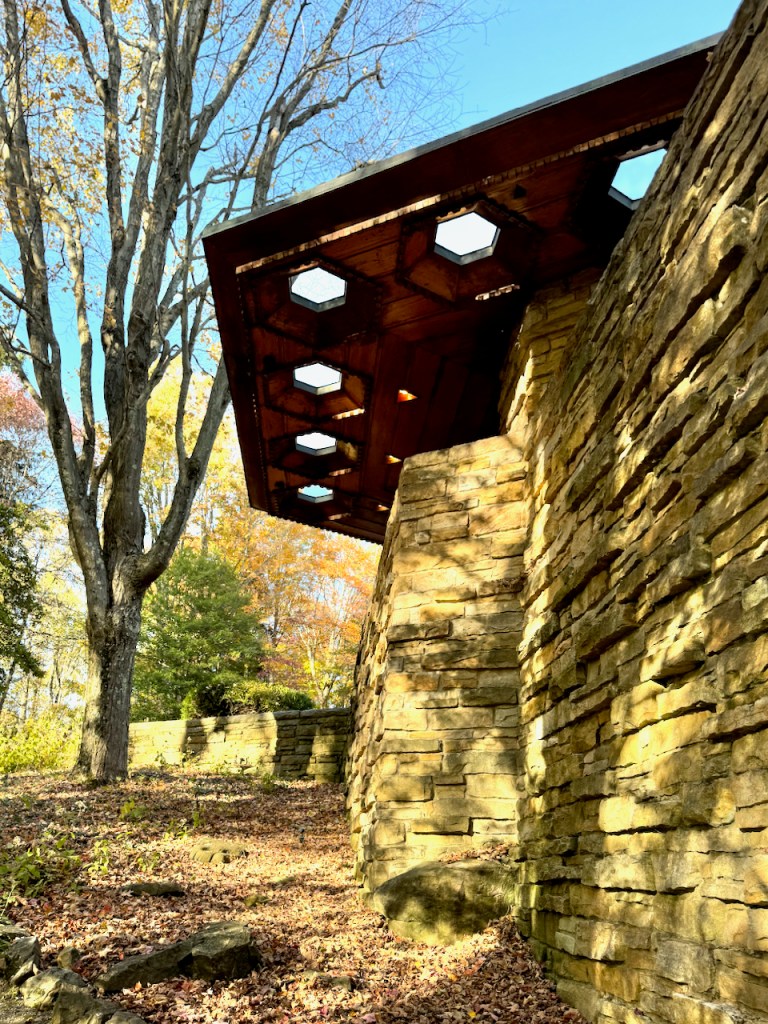
One of the main features on the outside of the house is overhang with the hexagonal openings. Sorry the second photo is a bit blurry. I had to back track on the tour and must have been hurried.



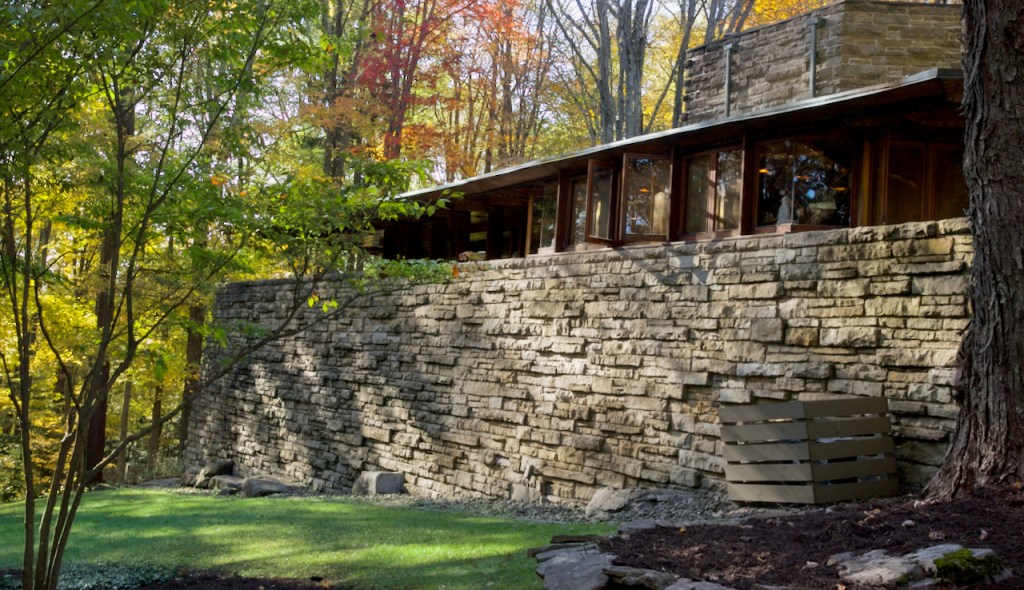
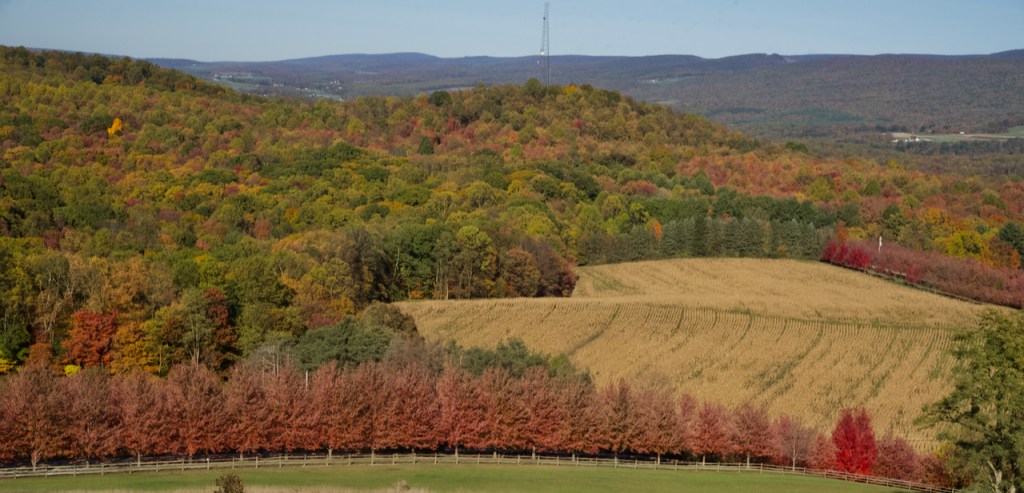
The views from the top of the hill are incredible with the fall foliage at near peak.


 Ophardt Photos
Wonderful photo essay. FLW has always fascinated me every since our days at River Forest. The architectural lines, the low over-all design, the built-in “everything”. and especially the use of wood throughout are highlights for the eye. Then, of course, are the chosen natural surroundings. I’m sure you have been to Talisin West in your neck of the woods, but if every you should go there photography-wise, let me know as I’d love to join you.
Great pictures thanks see you soon
It is wonderful that you can see all of this. Very interesting. Would you do a slide show for a YOPAS lunch some time? They would love your pictures. They are always the second Tuesday of the month.
Bev
Thanks for the comments. I was happy to do two days for these houses. Joann and I had been to Fallingwater and Kentuck Know quite a few years ago, but I was hoping for the fall colors. I really do not have the software or a lab top for presentations any more.